

Maevia Griffiths
HUD PhD Researcher
University of Copenhagen

Aurora Maria Pachano Alvarez
PhD Researcher
Universidad del Rosario
An email and a coffee in Bogotá were enough for two complete strangers to end up sharing an ethnographic research agenda for two weeks across Colombia’s Caribbean region. Before meeting, each of us had independently thought that “traveling alone with someone you don’t know is crazy.” The risk, however, had already been assumed. Two different PhD researchers, from two different countries (Ecuador and Switzerland), from two different universities (Universidad del Rosario for Aurora and University of Copenhagen for Maevia), two different research angles and methodologies but a strong common critical while empathetic ground of human and political values and practice. We thus mixed our interests, methods – such as filmmaking and life storytelling – bringing all our skills into a big Sancocho (a famous Colombian soup) of research.
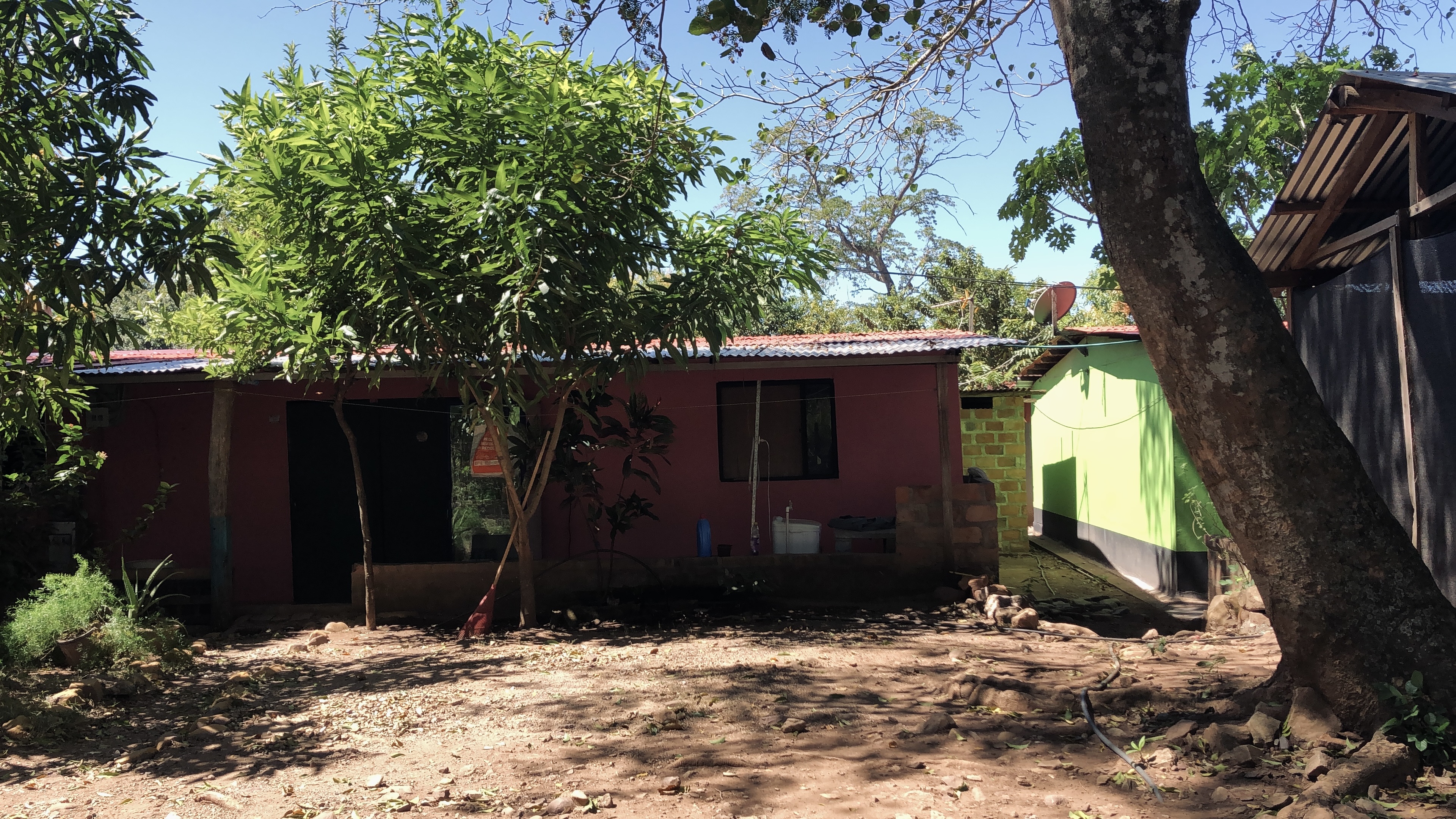
We met in Cartagena de Indias, from where we began our journey to the Montes de María. There, we interviewed a group of peace signatories of the FARC Peace Agreement. We then travelled to two Former Territorial Spaces for Training and Reincorporation (AETCR): Pondores, in La Guajira, and Tierra Grata, in Cesar, where we conducted most of the interviews.
Because the experience proved so positive, we continued working together throughout the semester. We visited ASOCUNT, an ecological farm cooperative that is part of a productive project led by former combatants; travelled to Icononzo (Tolima), where the AETCR La Fila is located; and went to Viotá (Cundinamarca), where we stayed in the home of a former FARC commander.
This collaborative work yielded gains of different kinds: an academic friendship, an appreciation for productive risk, deep learning processes, and the development of a sensitive fieldwork methodology we had not initially envisioned as such but which grew as we went on, and which we present below.
Before continuing, we want to emphasize that this type of collaboration—especially between researchers who do not know each other beforehand—is rather uncommon in academia. Fears around sharing field access, results, or potential research avenues often generate isolation, mistrust, and weakened solidarity. This story illustrates a positive pathway of collaboration grounded in trust and human solidarity.

Shared Work
Working together became an experience of research solidarity. We particularly highlight the long conversations we held with one another, as well as the possibility of sharing the mental and emotional burden that comes with listening to stories of pain and violence.
In total, we conducted 35 filmed interviews together—excluding those each of us carried out individually. All of the interviews, however, were fundamental to developing a deeper understanding of our topic: intimacy as a space where the public becomes embodied and negotiated in the personal realm, from affective, spatial, and representational perspectives. In this sense, we observed that it is possible to access “intimate” narratives without necessarily “becoming intimate” in the classical sense of a prolonged or deeply embedded relationship in people’s everyday lives.
Intimidad Como Herramienta Metodológica
In our fieldwork, we adopted a close and sensitive approach, which led us to identify intimacy as a methodological tool. In this regard, we draw on Lauren Berlant’s concept of intimacy. For Berlant, intimacy is not a private sphere nor an individual emotional state, but an affective, relational, and political structure that permeates all levels of social life. As a dynamic structure in constant construction, intimacy connects the unstable trajectories of individual lives with collective historical and political processes, becoming a privileged site for observing how large social structures are lived, resisted, and reconfigured at the level of everyday subjectivity.
During fieldwork in the ETCRs, working with intimacy as methodology meant paying attention to how people narrate, feel, and present their everyday lives, without separating the emotional from the political. This ethnographic and visual gaze listens affectively and allows access to situated forms of knowledge that other methodologies often fail to capture. This approach has enabled us to turn the intimate dimensions of the signatories’ lives into a close, caring, and empathetic pathway to knowledge, to relationships with participants, and to the construction of ethnographic data.
At the same time, working through intimacy also requires recognizing important limits: shared time, the duration of fieldwork, and the presence or absence of the camera. Intimacy, in this sense, is not necessarily understood as a long-term relationship or as full “inside” access to people’s lives. Acknowledging these limitations does not diminish the value of the work; on the contrary, it allows for greater methodological honesty.
The camera, in particular, introduces specific tensions into the ethnographic relationship. While it enables a unique positioning of discourse, generates visual intimacy, and opens new relationships to the act of testimony, it also establishes an additional bond that must be carefully negotiated: the one between the researchers, the device, and the participant. In many cases, this configuration deepened interactions and the willingness to share life stories; in others, it produced withdrawal, shyness, or self-restraint. There is also a potential illusion of closeness or relational depth that must be critically examined. In our case, working as a duo—one person in charge of the camera and the other focused on the relationship with the person testifying—helped balance these dynamics, reducing the centrality of the device and sustaining a more attentive listening space. Recognizing both the possibilities and limitations of the camera is essential for making explicit the concrete conditions of the research and the effects the device has on the ethnographic relationship.
Being Women and Foreigners
Our position as two women—and as non-Colombians—in a context marked by a long history of conflict significantly shaped the fieldwork. This combination can generate a perception of relative neutrality that facilitates dialogue and initial trust. Because we are not direct victims of the conflict, the way we are addressed differs: in some cases, this enables more honest, deep, and intimate narratives; in others, it leads to more emphatic or even more spectacularized accounts.
In terms of gender dynamics, this configuration also provides an added sense of safety. Being women seems to reduce expectations that interviewees will “perform” toughness associated with war, opening space for expressing emotional, everyday, or vulnerable dimensions of experience without risking social or symbolic standing. At the same time, being foreigners activates specific forms of exchange that transform the interview into a reciprocal dialogue. In Maevia’s case, many conversations opened into questions about Switzerland—daily life, food, language, flight distance, or whether war also exists there. With Aurora, references to Ecuador were framed through regional proximity: shared histories, cultural affinities, and a sense of familiarity—“like cousins”—emphasizing commonalities and the image of Ecuadorians as gentle and approachable people.
These exchanges, far from anecdotal, help rebalance the relationship and shift away from a unilateral interview logic oriented toward information extraction. By opening the conversation in both directions, they reinforce the sense that the outside world remains interested in participants’ lives and trajectories, contributing to the valorisation of lived experience. Interviewing together also allows for triangulation of perspectives, nuance, and a more professional interaction, reinforcing the idea that intimate narratives can be accessed without requiring prolonged intimacy.

Recriprocity
In the various places where we gathered information, we offered, as a form of reciprocity for participants’ time and willingness to share their lives, practical workshops in digital and audio-visual communication for interested community members. In total, we conducted three workshops: one in the Montes de María with communication officers from organizations and cooperatives, another in Tierra Grata with children of peace signatories and a third one in Bogota with some embers of ASOCUNT and of La Trocha (la casa de la Paz)
As a narrative methodology, we used the “hero’s journey,” inviting participants to recount a personal experience by breaking it into stages. The experience could be any kind—everyday or seemingly minor. What was striking was that everyone, adults and children alike, narrated lives shaped by armed conflict or the post-agreement period, and the ways they had learned to confront these realities. This gave us access to the rawness of war embedded in civilian life and allowed us to understand these testimonies as “memory exercises,” in the sense proposed by Jelin (2002): reconstructions of the past from the present, in dialogue with current social and political frameworks of reincorporation, enabling alternative narratives of conflict. Stories about childhood, family, education, or places lived are thus interpreted through the present of the post-agreement and the memories that sustain it.

Visual Participatory Action Research
Worked in this way, intimacy does not present itself as total or transparent access, but as a situated relational field—shaped by affects, devices, and positionalities—that enables understanding of how the personal and the political intertwine in lived experience.
Within this framework, Participatory Action Research (PAR)—a methodology developed in the 1970s by Orlando Fals Borda—offers a key reference for collective knowledge production with communities and for linking research and action toward social transformation. In direct dialogue with Joanne Rappaport’s work on visuality and writing as action (2018), this approach demonstrates how visual and written media can operate as forms of political action and bottom-up knowledge production. Our research aligns closely with, though is not fully embedded within, PAR in its strictest sense. While not all stages were co-designed with participants, we recognize the political and methodological potential of “visuality from below” as a form of listening, documentation, and collective memory production. Through visual work, spaces of visibility, archiving, and transmission are opened for the voices of peace signatories who—despite having been the focus of numerous reports, audio-visual productions, and media attention following the 2016 Peace Agreement—have gradually been displaced from public debate. Ten years into the peace process, their trajectories and memories are, to some extent, forgotten by the state and, in many cases, by society. In this sense, visuality operates not only as documentation, but as an active practice of memory and archive-making, capable of sustaining and circulating narratives that might otherwise remain silenced.

Hacemos Memoria / Making Memory
Our travels continued. Our academic concerns led us to Medellín—not to conduct interviews or visit territories this time, but to share what had begun to take shape through encounters, conversations, and movements in the field.
Before leaving Tierra Grata, we had already planned to submit a proposal to the International Colloquium Hacemos Memoria, organized by the University of Antioquia. The 2025 edition promised to be a space for collective reflection on how memories of war, armed conflict, and peace are constructed through cinema and television. In resonance with our own experience, the colloquium invited reflection on how audio-visual content not only narrates the past, but also produces meanings, emotions, and disputes around historical memory, shaping how these processes are perceived and remembered in the public sphere.
Thus, in August 2025, we presented the paper “From Within and From Outside: Intimacy in the Spaces of Political and Social Struggle of Peace Agreement Signatories in Pondores and Tierra Grata.”
In retrospect, this journey allowed us not only to produce knowledge, but to learn how to be in the field differently: more attentive to relationships, to the intimacies woven within spaces of political and social struggle, and to the sensitive ways these experiences can—and must—be narrated. What began as an uncertain journey between two strangers became shared work shaped by trust, listening, and mutual learning. Beyond the places visited and academic events attended, this process reminded us that research is also about building relationships and allowing oneself to be transformed by them.
The journeys, questions, and conversations continue, as does the effort to narrate—from within and from outside—the experiences of those who continue to build peace along trajectories marked by war. This text is just one more stop along that path.
References
Berlant, Lauren. 1998. Intimacy. Critical Inquiry. The University of Chicago Press. Vol. 24, No. 2. pp. 281-288. https://www.jstor.org/stable/1344169
Fals Borda, O. (1999). Orígenes universales y retos actuales de la IAP. Análisis Político, (38), 73–90. https://revistas.unal.edu.co/index.php/anpol/article/view/79283
Jelin, Elizabeth. 2002. Los trabajos de la memoria. Fondo de Cultura Económica. Ciudad Autónoma de Buenos Aires.
Rappaport, Joanne. 2018. ‘Visualidad y Escritura Como Acción: Investigación Acción Participativa En La Costa Caribe Colombiana’. Revista Colombiana de Sociología 41 (1): 133–56. https://doi.org/10.15446/rcs.v41n1.66272.