

Jonathan Luke Austin
Professor
The University of Copenhagen
jla@ifs.ku.dk

Rachel Howell
Senior Researcher
EssentialTech, EPFL
rachel.howell@epfl.ch
Can technology strengthen ecosystems of psychosocial support in and beyond detention?
- At least 1 in 7 incarcerated individuals suffer from a severe mental illness;
- At least 50% have a history of mental illness more broadly;
- These figures are higher in low and middle-income countries, and in situations of humanitarian crisis;
- In low and middle-income countries between 76% and 85% of people receive no treatment for mental illness;
- Levels of psychiatric bed provision in low and middle-income countries have stagnated or declined since 1990;
- The prevalence of mental illness has not declined globally for over 25 years.

Barriers to mental health screening in detention generate violent feedback loops . . .
Mental health and psychosocial wellbeing depend on complex ecosystems of support — strong family and community ties, sustained political commitment, and locally grounded expertise. In detention settings, this vital ecosystem is often absent, creating a major barrier to treatment and recovery. Worse, its absence has ripple effects; weakening these support systems across society. These risks are heightened by a deep knowledge gap around mental illness in detention, driven by systemic barriers to proper screening and diagnosis
Screening for mental illness in detention is notoriously difficult — across the world, but especially amid broader humanitarian crises — due to shortages of infrastructure, equipment, trained staff, funding, and basic security issues. But the consequences extend far beyond suffering in prisons and other detention contexts specifically. These diagnostic gaps can fuel dangerous feedback loops: undiagnosed mental illness contributes to insecure detention environments, higher rates of recidivism, urban poverty, and criminality, as well as increased violence — including intimate partner and gang violence — and may even heighten the risk of armed conflict in already fragile socio-political settings.


AMIDST:
Towards an adapted digital tool for assisted transdiagnostic screening in detention
To overcome these obstacles, and their violent feedback loops, we are exploring low-intensity, yet globally scalable, automated digital screening tools for the rapid diagnosis of mental illness in detention contexts.
Strengthening ecosystems of psychosocial support in and beyond detention is a complex multi-stakeholder task. But a pragmatic start is designing a system to longitudinally track the social impact of mental illness in detention by gathering granular, disaggregated, and transdiagnostic data on detainee mental health. This system must be modular and adaptive to drive sustainable referral pathways aimed at two key goals: diverting individuals with mental illness from the justice system and reintegrating released detainees into society. Emerging technologies for the automated transdiagnostic screening and triage of mental illness now make this data-driven approach feasible.
At present, however, such technologies are not adapted to the specific contexts of either carceral environments or low- and middle-income settings. Instead, they are typically designed by commercial actors for deployment in resource-intensive medical environments in Europe and North America. These propriety tools do not meet the security and confidentiality needs intrinsic to carceral institutions, and so are not rolled out for detainee screening. At the same time, their resource-intensive and heavily infrastructure-dependent design fits poorly with the healthcare systems in most low and middle income countries where they nonetheless have great potential to benefit the most vulnerable.

To address these challenges, we are exploring novel technologies which may improve screening efficiency — Bayesian network analysis, LLM tools, and related innovations. These technologies have the potential to be integrated into a transdiagnostic digital clinical decision support system. Deployed on mobile devices, this system could be capable of simultaneously screening for multiple mental health conditions (depression, anxiety, mania, PTSD, substance abuse disorder, psychosis, etc.) very rapidly — in a few minutes, as opposed to the hours that diagnosis requires today.
Such a tool must be adapted to humanitarian & LMIC contexts. This includes technical issues (data protection, availability of electricity, etc.) and adaptability to local primary care contexts by integrating referral pathways that allow for ‘stepped-care’ (least resource intensive treatment protocols) and collaborative ‘task sharing’ models (integrating non-specialist staff into psychosocial care). In a pilot phase, we aim to test the potential of such a technology by deploying it for entry/exit screening and triage in detention contexts to gather granular longitudinal data on the mental health burden of detention. This will provide a solid framework on which to imagine more comprehensive deployments.
Malembe, Malembe:
Innovation from the global south
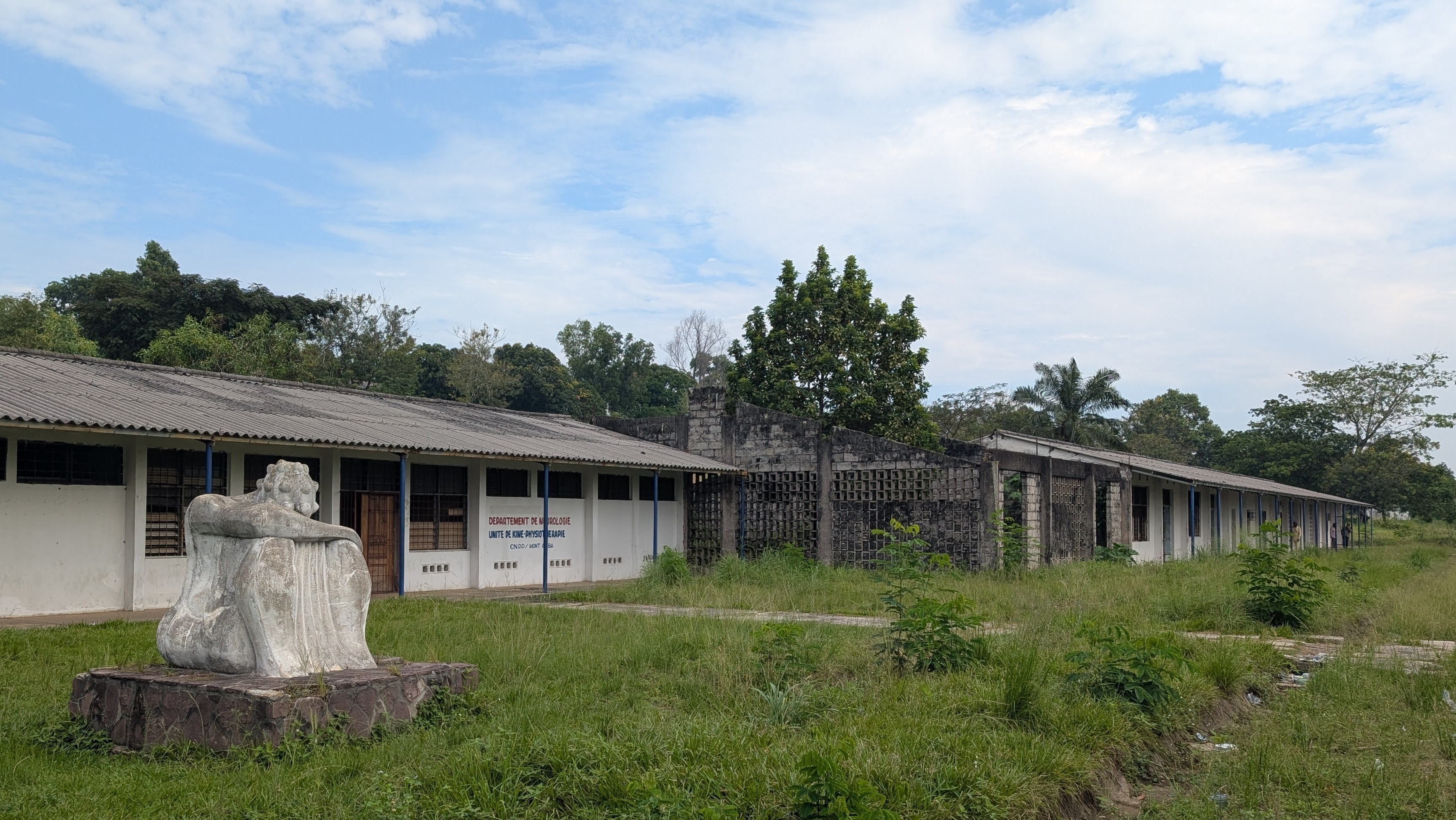
AMIDST draws on collaborations with key stakeholders in the Democratic Republic of the Congo (DRC) and Colombia. It aims not only to improve detention conditions, but also to position these most protracted and acute of humanitarian crises as a source of ‘reverse innovation’ — teaching us lessons with critical relevance for mental health and psychosocial practice across the entire world. AMIDST thus hopes to develop scalable mental health initiatives that are led from the global south. The importance of this is twofold. Global mental health policy is often critiqued for its Eurocentricism; exporting biomedical health paradigms that fit poorly elsewhere and extenuate forms of epistemic injustice. At the same time, these biomedical paradigms have failed to produce substantial change in wealthy nations, where a transversal mental health crisis also exists. Developing mental health initiatives from the ground of ‘crisis’ is thus not simply a decolonial move, but one that might transform our understanding of mental health. In this, AMIDST’s guiding ethos is shaped by the Congolese saying malembe, malembe — to work slowly, slowly, carefully, carefully, or calmly, calmly — to drive sustainable change, whether technologically, socially, or politically.


learn more

AMIDST emerges from intense basic research in the Congo exploring violence in detention. This includes the ethnographic interviewing of former detainees, the cartographic mapping of detention spaces, and sustained work with medical professionals, civil society, and others. Find out more about our basic research here.

AMIDST’s design criteria were developed bottom-up through a participatory methodology of co-design. In this, the goal is to develop technological innovations led from the needs of the global south but which are also applicable to global mental health problems. Find out more about our co-design methodology here.

For more details on the development of AMIDST you can consult this white paper, which provides a meta-review of existing initiatives in this area, details on the methodological logic of AMIDST, and planned future research. Read the white paper here.