
When art becomes activism, the body becomes evidence. Experimental film and dance can challenge how violence is represented—and in doing so, transform aesthetic experience into a tool for prevention and collective accountability.

Maevia Griffiths
HUD PhD Researcher
The University of Copenhagen
HUD PhD Researcher Maevia Griffiths has published a new peer-reviewed article with the leading journal International Political Sociology, entitled “Movement, Space, and Torture: Exploring Contemporary Dance and Experimental Filmmaking as a Method for International Relations.” The article is based on a collaboration between Maevia, Aline Wani, and Massimiliano Masini with the Violence Prevention Initiative, a research project led by Jonathan Luke Austin whose work preceded that of HUD.
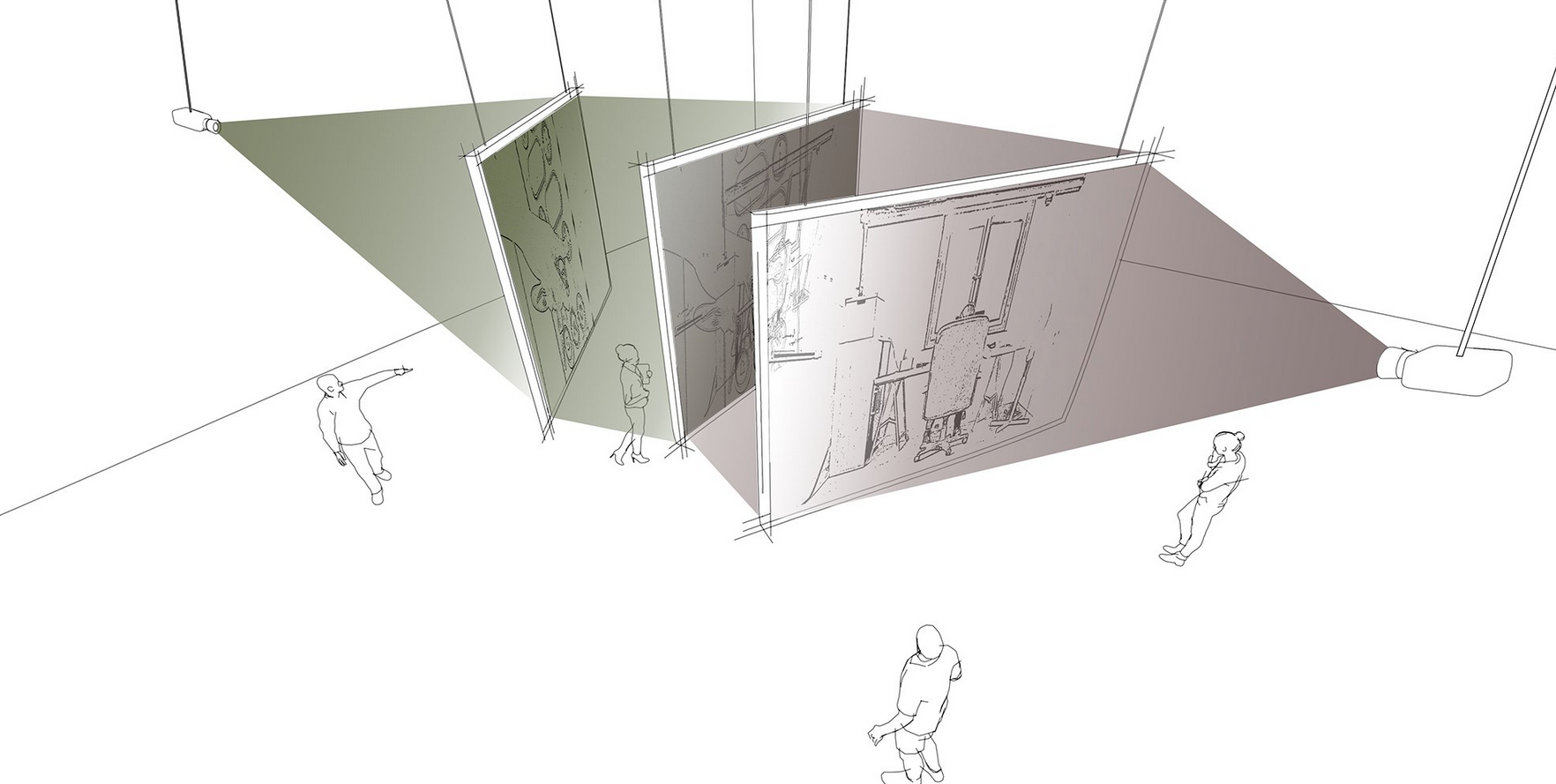
The article asks whether artistic practices can help prevent violence. To do so, it argues that the way we represent violence shapes the way we understand it, and that creative works like film and dance can push that understanding in more honest if politically troubling directions. The researchers collaborated with artists to create a short film called Grievable//Ungrievable, part of an exhibition exploring the inner world of people who commit torture. Rather than showing violence in the usual, detached way, the film deliberately unsettles the viewer, using movement and sensation to create a more visceral, embodied sense of what violence really means. The goal is to make audiences feel something that statistics and policy reports can’t convey. In this, and in line with HUD, the paper methodologically argues that academic research doesn’t have to stay within the neat boundaries of traditional scholarship. By bringing together political science, filmmaking, and dance, the authors show that blending disciplines can produce richer, more nuanced knowledge of the kind that might actually shift perspectives and inspire accountability.
Abstract
This paper looks at contemporary dance and experimental filmmaking as transdisciplinary research methods for international political sociology. Our main argument is that understandings of torture which underlie prevention strategies are shaped by what is made visible in the representation of violence and, therefore, aesthetic products can support such prevention strategies by challenging these assumptions and introducing spaces for collective accountability. We show this by, discussing Grievable//Ungrievable, a short film realized in collaboration with Geneva-based artists as part of an immersive exhibition about the lived realities of perpetrators of torture. In particular, we highlight how the short film questions the ways in which torture is represented while eliciting sensations that are productive of embodied knowledge. To do so, we introduce transdisciplinary debates on the representation of violence and on filmmaking and dance as international relations methods, in order to illustrate the epistemological and theoretical background of the short film. We believe that our contribution shows the potential of transdisciplinary, experimental, and creative approaches to international political sociology that participate in the production of heterogenous knowledge and challenge disciplinary boundaries.
Below, or accessible here, you can read the article.